Periodic Table
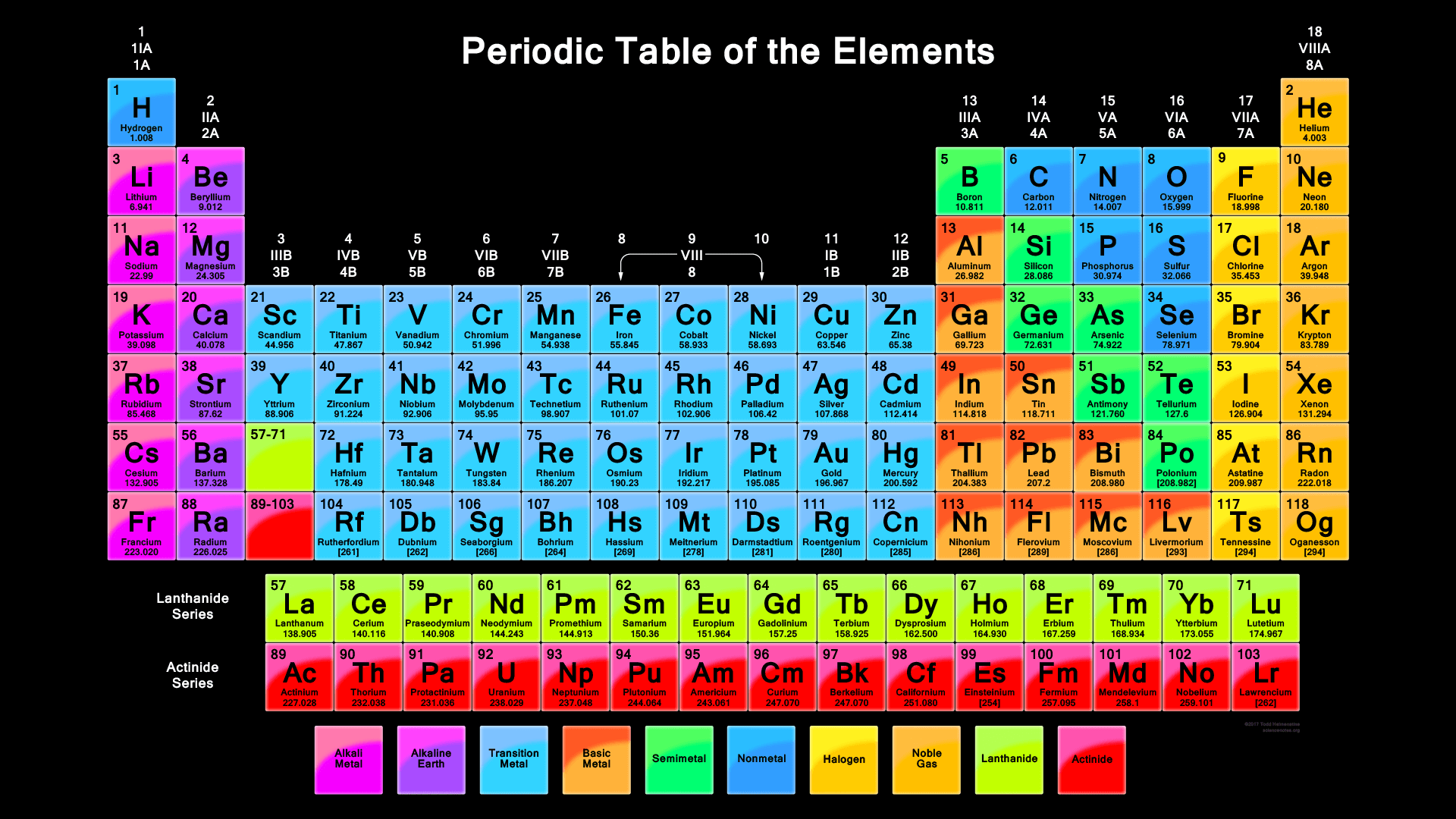
The Periodic Table: The Foundation of Modern Chemistry
The periodic table is one of the most important tools in science. It organizes all known chemical elements in a structured way, helping scientists understand their properties, relationships, and behavior. Since its development, the periodic table has played a crucial role in advancing chemistry, physics, medicine, and technology.
What Is the Periodic Table?
The periodic table is a chart that arranges chemical elements according to their atomic number, electron configuration, and recurring chemical properties. Each element is represented by a unique symbol and occupies a specific position in the table.
Currently, the periodic table contains 118 confirmed elements, ranging from Hydrogen (H), the lightest element, to Oganesson (Og), one of the heaviest known elements.
History of the Periodic Table
The modern periodic table was first developed by Dmitri Mendeleev in 1869. Mendeleev arranged elements based on their atomic masses and noticed repeating patterns in their properties. He even predicted the existence and characteristics of several elements that had not yet been discovered.
Later, Henry Moseley refined the table by organizing elements according to their atomic numbers, creating the basis for the modern periodic table used today.
Structure of the Periodic Table
The periodic table is organized into:
1. Periods (Rows)
Horizontal rows are called periods. There are seven periods in the periodic table. Elements within the same period have the same number of electron shells.
2. Groups (Columns)
Vertical columns are called groups. There are eighteen groups. Elements in the same group often have similar chemical properties because they have the same number of valence electrons.
Major Categories of Elements
Alkali Metals
These elements are found in Group 1 and are highly reactive. Examples include Lithium (Li), Sodium (Na), and Potassium (K).
Alkaline Earth Metals
Located in Group 2, these metals are reactive but less so than alkali metals. Examples include Magnesium (Mg) and Calcium (Ca).
Transition Metals
These elements occupy the center of the periodic table and include metals such as Iron (Fe), Copper (Cu), and Gold (Au).
Halogens
Found in Group 17, halogens are highly reactive nonmetals. Examples include Fluorine (F), Chlorine (Cl), and Bromine (Br).
Noble Gases
Located in Group 18, noble gases are known for their stability and low reactivity. Examples include Helium (He), Neon (Ne), and Argon (Ar).
Importance of the Periodic Table
The periodic table helps scientists:
Predict chemical reactions.
Understand atomic structure.
Discover new elements.
Develop medicines and materials.
Study environmental and industrial processes.
Without the periodic table, modern chemistry and many scientific advancements would not be possible.
Interesting Facts About the Periodic Table
Hydrogen is the most abundant element in the universe.
Helium was discovered in the Sun before it was found on Earth.
Most elements in the periodic table are metals.
Scientists continue to study and synthesize new elements.
The periodic table is often called the "map of chemistry."
Conclusion
The periodic table is much more than a chart of elements—it is a powerful scientific framework that helps us understand the building blocks of matter. From everyday materials to advanced technologies, the periodic table continues to guide discoveries and innovations across the world. As science progresses, this remarkable tool remains at the heart of our understanding of the natural universe.